difficulty
Beginner

Servings
2 servings

Prep time
10 min

Cooking time
10 min

Calories
825 kcal
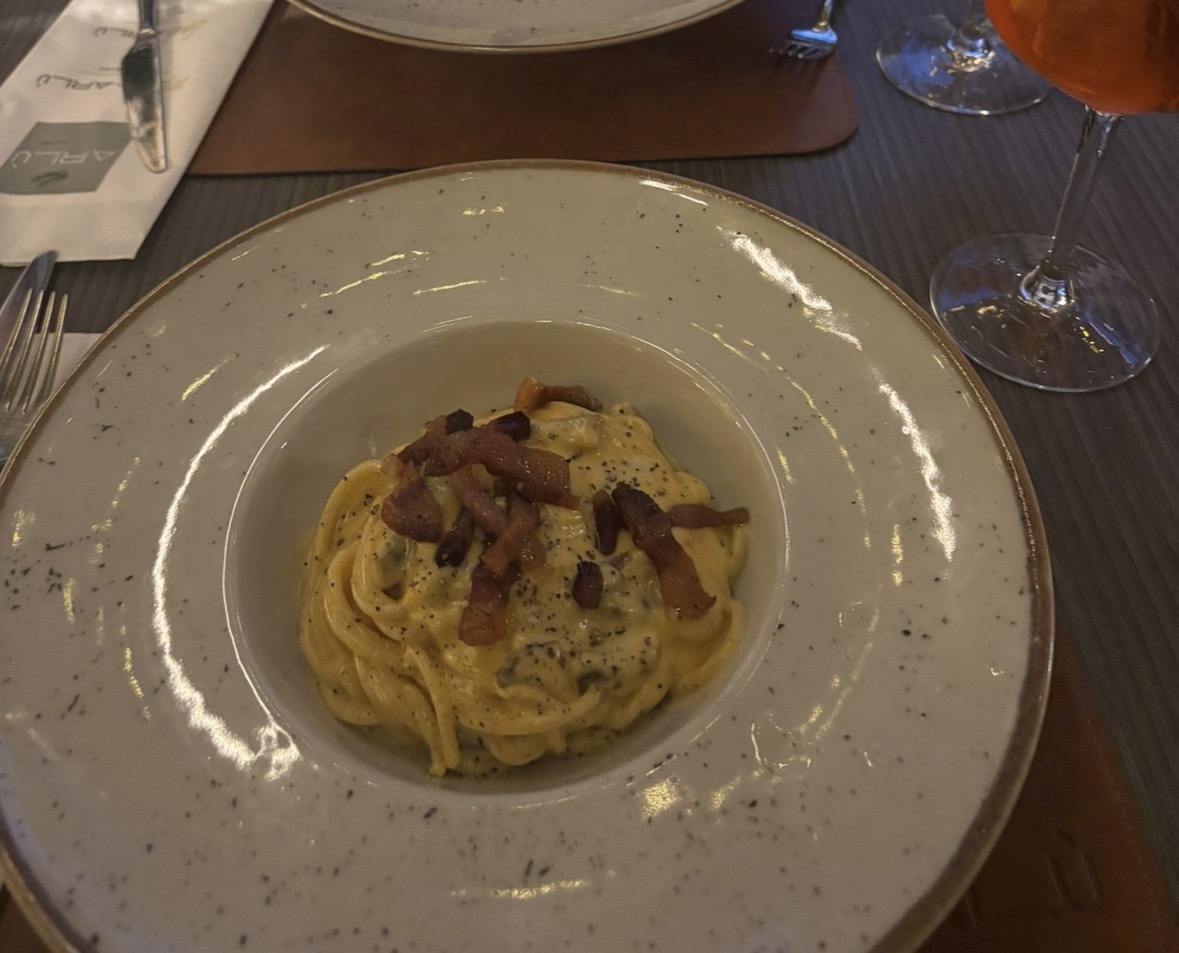
There’s something about a traditional pasta carbonara that just feels timeless. It’s one of those classic Italian dishes that proves you really don’t need many ingredients to make something incredible. With crispy guanciale, freshly cracked black pepper, sharp pecorino romano, and a silky egg-based sauce, this pasta is rich and comforting while still feeling simple and elegant.
What makes authentic Roman carbonara so special is the texture of the sauce. There’s no cream involved, just eggs, cheese, pasta water, and rendered guanciale fat coming together to create that smooth, glossy coating around the spaghetti. Every bite is savory, peppery, and packed with flavor.
Once you make it the traditional way, it’s honestly hard to go back to anything else.
Why You’ll Love This Pasta Carbonara
This carbonara is rich, creamy, and packed with authentic Roman flavor while using only a few ingredients. The guanciale adds deep savory flavor while the pecorino and black pepper create the classic creamy sauce carbonara is known for.
It’s also surprisingly quick to make once everything is prepared.
Ingredients
- 200 g spaghetti
- 120 g guanciale
- 2 egg yolks + 1 whole egg
- 60 g pecorino romano (finely grated)
- Freshly cracked black pepper
- Salt for pasta water
Instructions
- Bring a pot of salted water to a boil and cook the spaghetti until al dente.
- Cut the guanciale into small strips or cubes.
- Cook the guanciale in a dry pan over medium heat until crispy and the fat has rendered.
- In a bowl, whisk together the egg yolks, whole egg, pecorino romano, and plenty of black pepper.
- Reserve some pasta water before draining the spaghetti.
- Add the hot spaghetti to the pan with the guanciale and toss well.
- Remove the pan from the heat.
- Quickly stir in the egg and cheese mixture while tossing continuously.
- Add a splash of pasta water until the sauce becomes glossy and silky.
- Serve immediately with extra pecorino and black pepper on top.
Nutrition per serving
- Protein: ~32 g
- Fat: ~45 g
- Carbohydrates : ~60 g
- Fiber: ~3 g
Share this recipe
Make Ahead & Meal Prep
Traditional carbonara is definitely best served fresh since the sauce stays the creamiest right after making it. But you can still prep a few things ahead to make dinner much faster.
You can grate the pecorino romano, cut the guanciale, and mix the eggs beforehand and keep everything in the fridge until ready to cook. That way the whole recipe comes together in about 15 minutes.
If you have leftovers, store them in an airtight container in the fridge for up to 2 days. Reheat gently in a pan over low heat with a small splash of water to help loosen the sauce again.
Traditional Tips
- Always remove the pan from the heat before adding the eggs
- Use finely grated pecorino for a smoother sauce
- Guanciale is the traditional meat used in Rome
- Fresh black pepper is essential for authentic flavor
- The sauce should be silky, never scrambled
FAQ
Guanciale is cured pork cheek and the traditional meat used in authentic Roman carbonara. It has a richer, deeper flavor than most other cured pork because of its higher fat content, which also helps create that silky sauce.
Yes, pancetta is the closest substitute and works well if you can’t find guanciale. However, it’s a bit leaner and milder in flavor, so the result won’t be quite as rich or traditional as the Roman original.
This usually happens when the pan is too hot. The key is to remove the pan from the heat before adding the egg mixture and to toss quickly so the residual heat gently thickens the sauce instead of cooking the eggs too fast.
Spaghetti is the most classic choice for carbonara, but rigatoni is also commonly used in Rome. Both work well, depending on the texture you prefer.
Pecorino Romano is the authentic choice. It’s sharp, salty, and gives carbonara its signature depth of flavor. Parmesan can be used in a pinch, but it will change the taste slightly.

Recipe by vino
I love traditional carbonara because it proves how incredible simple ingredients can be when done properly. The creamy sauce without any cream honestly feels almost magical the first time you make it correctly. It’s one of those timeless Italian recipes that never needs changing.
Other Pasta Recipes You Might Like


